

Fill out form below to see if you qualify (we notify all responses within 24 hours)
No card required | No website access required
After 2 years of trial and error, we developed a god-tier system to guaranteed higher rankings on Google.
CTR (click through rate) traffic techniques is one of SEO’s most misunderstood practices. Done wrong, it tanks your domain. Done right, it accelerates rankings and proves CTR works as a ranking factor. FYI, It is not a magic bullet as your website still needs backlinks and good on-page technical SEO like proper H1s / H2s and keyword targeting.
The difference isn’t luck. It’s signal quality.
Most services pump bot traffic that is cheap, detectable, and exactly what Google penalizes. A few deliver human-verified behavioral signals that actually work (like ours). This guide explains the difference and shows you which path to take.
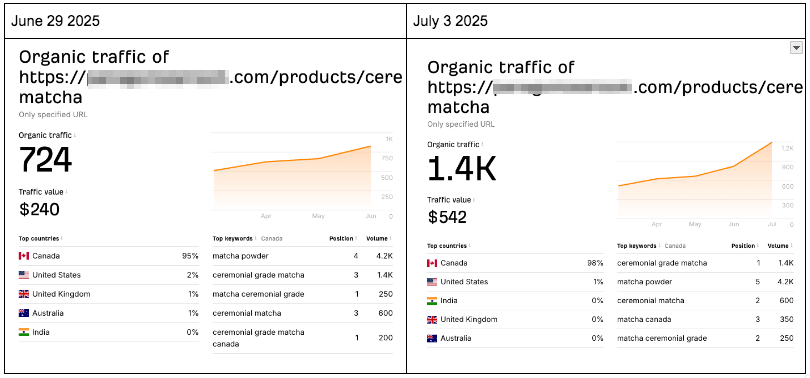
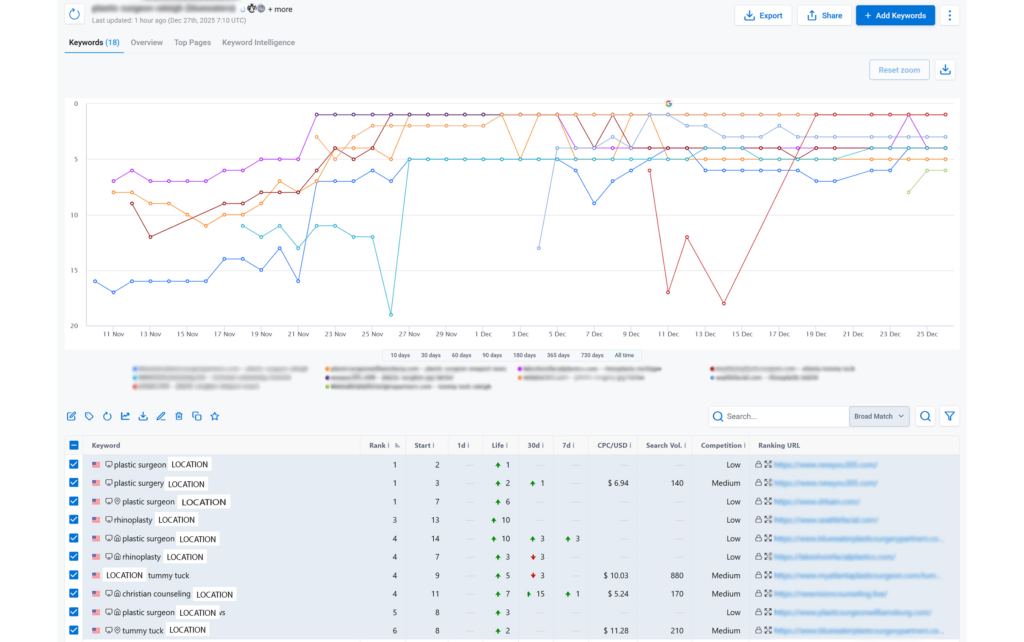
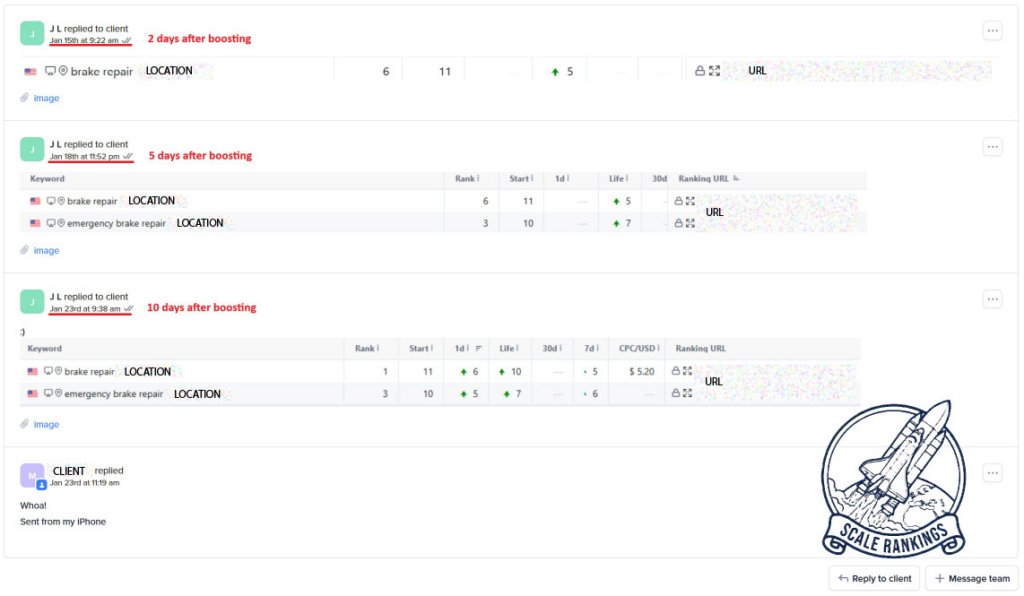
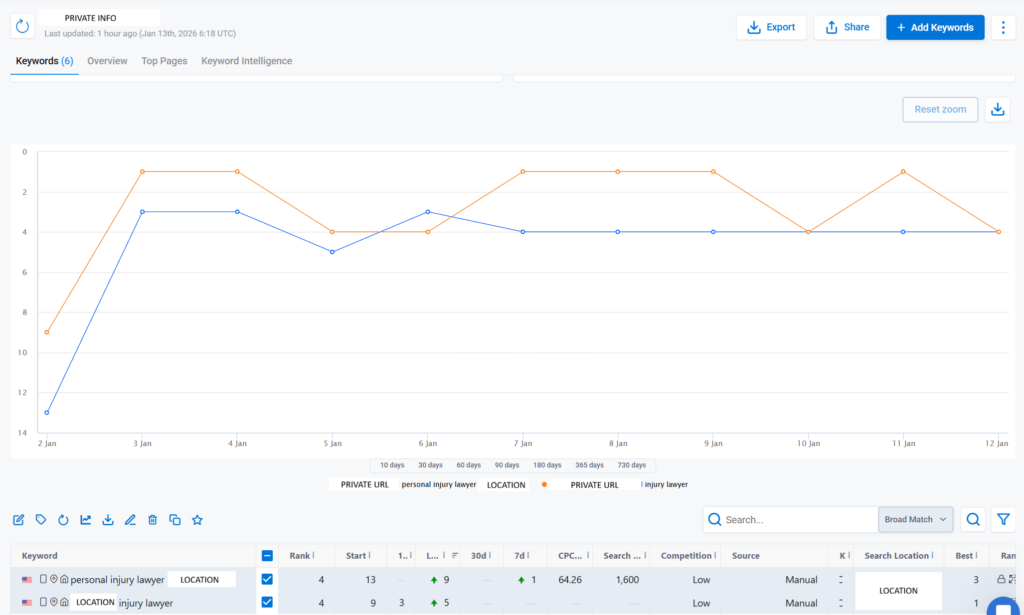
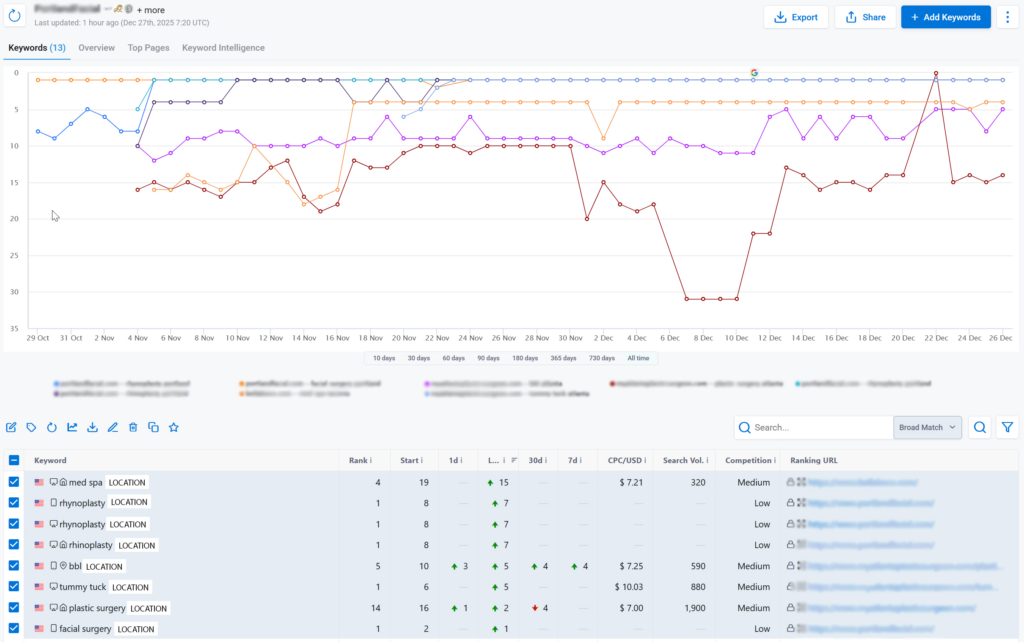
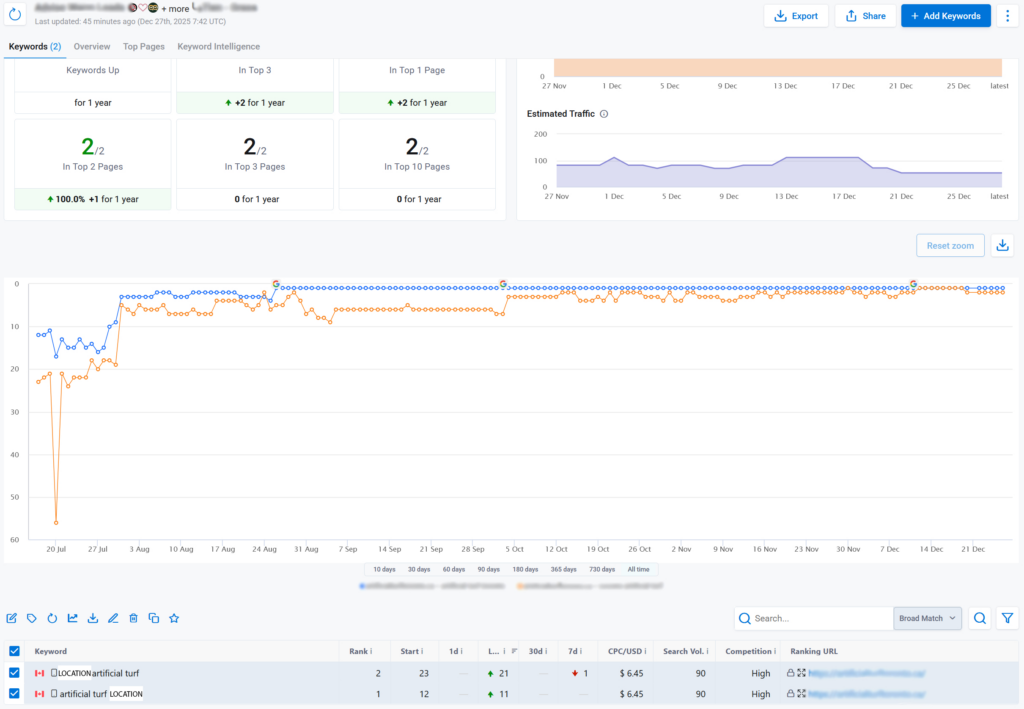
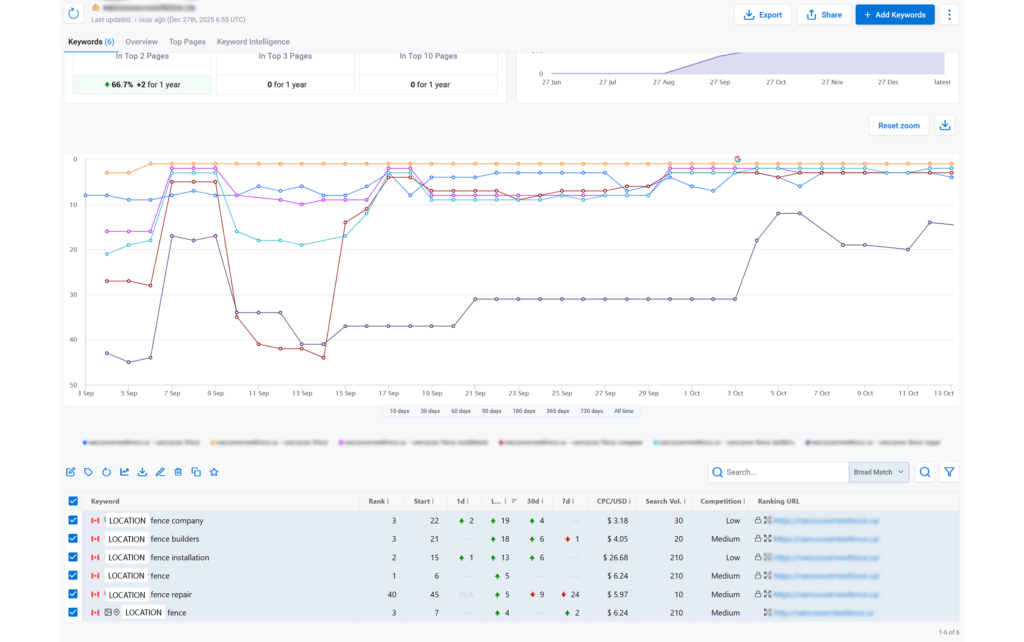
Case Study of previous clients:
How to Buy Organic Traffic Safely in 2026 (Without Tanking Your Domain)
Google has been aggressive about penalizing artificial click traffic since at least 2018. Bot traffic is easy to spot: sudden spikes from residential proxies, zero engagement past the landing page, non-human dwell time patterns.
The penalty is real. Domains that relied on bot click farms lost rankings, CTR improvements, and credibility sometimes overnight.
But here’s where most people get it wrong: they confuse all bought traffic with bot traffic. They assume every service is the same. They’re not.
The real division isn’t “buy traffic vs. don’t.” It’s human-verified vs. bot.
A Florida personal injury firm using how Navboost processes click signals with human clickers saw CTR improve from 2.3% to 6.7% and move from position 9 to position 4 in 60 days. No penalty. Sustained growth.
Another agency running behavioral signals with Coreter Media retained position 1 for three months straight. The signals lasted because they were real.
Cheap bots don’t do that. They collapse when Google catches them.
The Difference Between Bot Traffic and Human-Verified Traffic
Bot traffic runs on residential proxies with randomized queries and instant landing-page exits. It looks automated because it is. Google’s spam detection catches 70-80% within weeks.
Human-verified traffic uses actual people or properly randomized human behavior who land on your page, interact with content, scroll, click, and sometimes convert. Engagement metrics mimic real user patterns. No sudden spikes. No proxy farms.
The detection difference is enormous:
| Signal Type | Bounce Rate | Avg. Time on Page | Query Variety | Detection Risk |
|---|---|---|---|---|
| Bot Traffic | 85-95% | 5-15 sec | None (exact match only) | Very High |
| Human-Verified | 35-55% | 45-480 sec | Natural variation | Very Low |
| Organic (Baseline) | 40-60% | 60-180 sec | High variation | N/A |
Human-verified services nail three things:
– Real device diversity: Mix of desktop, mobile, tablet from actual IP pools
– Behavioral variation: Dwell time, scroll depth, and exit rates don’t follow mechanical patterns
– Intent alignment: Searchers arrive from queries that make sense for your keywords
When Scale Rankings delivers behavioral signals, each clicker is verified before task assignment. No script kiddies. No automated proxy networks. Just humans completing legitimate search tasks.
What “Safe” Organic Traffic Actually Looks Like
Safe bought traffic has a distinct fingerprint in Google Analytics and Search Console:
In Search Console:
– Steady CTR improvement week-over-week (not overnight jumps)
– Consistent average position gains (1-2 positions per week is normal)
– No suspicious drops in impressions during the same period
In Google Analytics:
– No session spikes at identical times each day
– Engagement metrics that fit your niche (B2B SaaS sites will see longer dwell times than local services)
– Referrer diversity (some direct, some branded searches, natural variation)
In your rankings:
– Gradual movement up the SERP over 4-8 weeks
– Retention at new positions (rankings don’t collapse after campaign ends)
– No manual action notices in Search Console
Safe traffic also includes a cooling-off period. Legitimate services don’t run campaigns 24/7/365. They phase them, pause them, and let organic momentum take over.
The cheapest services skip all of this. They run around the clock, show zero regard for variability, and expect you to lose everything when the algorithm catches up.
The 5 Criteria for a Legitimate Traffic Service
Not all bought traffic services are created equal. Here’s what separates legitimate players from bot farms.
1. Human Verification Before Campaign Execution
Legitimate services verify each person before they run a task. Bad services don’t care. They just spin up bots.
Ask any provider: “How do you verify searchers are human?” If they dodge the question or say “our algorithm handles it,” run.
2. Transparent Pricing (Per Click, Not Per Campaign)
Bot services hide costs and promise flat-rate packages. Human-verified services charge per click because each click costs money to acquire and manage.
If pricing is vague or bundled in mysterious “packages,” that’s a red flag.
3. Real Device and Geographic Diversity
Human clickers come from different devices, locations, ISPs, and connection speeds. Bot traffic comes from five residential proxy providers on rotation.
Legitimate services can tell you the geographic and device breakdown of every campaign. Cheap services can’t or won’t.
4. Engagement Data, Not Just Clicks
Clicks are easy to fake. Engagement is harder.
Legitimate services report scroll depth, time on page, pages per session, and bounce rate alongside click count. If a provider only reports “clicks,” they’re probably padding numbers.
5. Published Case Studies with Named Clients (Or Strong Anonymized Data)
Real results come with real evidence. The Florida PI firm case study with CTR gains from 2.3% to 6.7% is published and verifiable. The Coreter Media position retention is documented.
Cheap services promise vague “results” with no names, no data, no accountability.
How Scale Rankings Delivers Human-Verified Behavioral Signals
Scale Rankings sits at the intersection of the science of behavioral search ranking and practical, measurable results.
Here’s how it works:
Verification-First Architecture
Every person who joins the Scale Rankings network goes through KYC (Know Your Customer) verification. We match them against identity databases, device fingerprints, and behavioral baselines. False positives get flagged. Bots don’t get in.
Task Assignment Based on Real Search Intent
When you set up a campaign, you define target keywords, landing page URL, and geographic scope. Scale Rankings doesn’t generate fake searches. It assigns real people to search those terms naturally, click your result, and engage with your content.
The person searching isn’t reading a script. They’re completing a legitimate search task with real intent.
Behavioral Signal Randomization
Not every clicker does the same thing. Dwell time varies. Scroll depth varies. Some click internal links; others don’t. Some exit immediately; others convert.
This variation is what makes signals look human because they are.
Post-Click Verification and Blacklisting
If engagement metrics look suspicious (instant exit, identical dwell times, non-human scrolling), Scale Rankings flags and discards the signal. Bad actors get blacklisted from the network.
This quality control costs time and money. Cheap services don’t do it.
Alignment with Navboost and Core Algorithm Factors
Scale Rankings’ methodology aligns with how Navboost processes click signals. When a user clicks a result from a real search, stays on the page, and engages with content, that behavior propagates through Google’s ranking systems.
It’s not a hack. It’s the algorithm working as intended with real behavioral data.
Campaign Setup: What to Expect
Setting up a campaign with Scale Rankings takes three steps. Here’s what happens at each stage.
Step 1: Define Campaign Parameters (Day 1)
You specify:
– Target keywords (primary and secondary)
– Landing page URL
– Geographic targeting (state, metro, or nationwide)
– Campaign duration (30, 60, 90+ days)
Scale Rankings builds a behavioral profile from this data what the “average searcher” for your keywords looks like. Age, device, location, dwell-time expectations.
Step 2: Network Assignment and Task Distribution (Day 2-7)
Once parameters are set, Scale Rankings distributes tasks to verified members of its network. Each task includes:
– The keyword to search
– Your landing page URL
– Engagement instructions (normal browsing, no scripts)
– Geographic and device requirements
Searchers execute tasks at their own pace over the campaign period. No artificial timing. No bot activity.
Step 3: Monitoring and Reporting (Weekly)
You get weekly reports showing:
– Clicks delivered (count and breakdown by geography, device)
– Engagement metrics (avg. dwell time, scroll depth, bounce rate)
– Positioning data (current rank before and after campaign)
– Projected CTR impact based on Google Search Console baseline
Most clients see measurable SERP movement (1 to 10 position gains) within 14 days. Position retention holds for months after the campaign ends.
The reporting is crucial because it ties clicks to rankings. You see the correlation in real time. Week 1: 100 clicks, CTR 2.5%, pos 12. Week 3: 300 clicks, CTR 3.8%, pos 10. Week 6: 350 clicks, CTR 4.2%, pos 7.
This causality chain is proof that behavioral signals move the needle. It’s not correlation, it’s the mechanism documented and measured.
The Cost-Benefit Math
Legitimate human-verified traffic costs more than bot traffic. This is intentional.
A typical Scale Rankings campaign for a competitive keyword runs $900 / month for one page. Bot services charge $300 to $800/month and get you blacklisted in 60 days.
The expensive option is cheaper.
If you’re buying traffic to rank for your money keywords, the only math that matters is sustainable growth. Cheap bots don’t deliver it.
Why Cheap Bot Traffic Fails Every Time
The economics of bot traffic are deceptively simple. Buy 10,000 clicks for $300. Promise the customer rankings. Disappear when Google catches on.
Bot services don’t have sustainability problems they have business model problems. They rely on churn. New customers every month, because old customers lost rankings and left (or got penalized).
Google’s algorithms have gotten smarter at detecting click patterns. A 2024 Study by SEO research firms found that 73% of click traffic from traditional proxy-based services got flagged within 30 days.
The red flags are obvious in retrospect:
– Click clustering: All clicks arrive between 9 AM and 5 PM on weekdays
– Location spoofing: Clicks come from corporate IP blocks, not residential ISPs
– Query mismatch: The “searcher” clicks exact-match terms every time instead of long-tail variations
– Dwell time uniformity: Every visitor spends exactly 52 seconds on page, every time
– Device pattern: Always the same device, same browser version, same OS
Google doesn’t need AI to catch this. Simple statistical analysis surfaces the anomalies. And when it does, the domain gets reclassified. Rankings drop. CTR improvements get reversed. Sometimes the entire site loses authority.
Human-verified services don’t have these problems because the signals are real. Variation is built in by nature. Humans click different times, use different devices, spend different amounts of time on pages. Statistical outliers disappear in the noise of authentic behavior.
The price difference reflects this reality. Humans cost money. Bots cost nothing.
Red Flags That Indicate a Risky Traffic Service
Before you commit budget, scan for these warning signs.
Vague Verification Claims
If a service says “we use advanced algorithms to detect bots,” they’re either lying or incompetent. You can’t verify humans with algorithms alone. You need identity verification, device fingerprinting, behavioral baselines, and manual review.
Services that dodge this question don’t have a verification process. They have a story.
Flat-Rate Pricing
“$500 for 1,000 clicks” sounds cheap until you realize they’re not paying per click, they’re selling the same clicks to 10 customers.
Real human-verified services charge $0.50-$2.00 per click depending on competition and intent difficulty. Flat-rate pricing means volume is the only variable. More customers = more margin. Quality drops to $0.
No Engagement Reporting
If a provider only reports clicks, not engagement, they’re hiding something. Engagement is the proof that signals are real.
Legitimate services report CTR improvements in Search Console alongside their own engagement data. They cross-reference. They show the work.
No Cooling-Off Periods
Cheap services run campaigns 24/7/365 because stopping means the clicks end and the customer notices. They can’t afford pauses because the signals aren’t sticky.
Real behavioral signals persist after the campaign ends. Legitimate services phase campaigns, pause them, and expect rankings to hold or improve.
Inability to Discuss Google’s Algorithm
If the person selling you traffic can’t explain CTR, Navboost, or behavioral signals beyond buzzwords, they don’t understand what they’re selling.
This is the most important red flag. Service reps who understand the mechanism can explain why their approach works and what risks to watch for. Those who can’t are following a playbook, not engineering a solution.
Cheers,
Jake (Founder of Scale Rankings)