
Getting your brand mentioned in Google Gemini AI Overviews and Grok (xAI) DeepSearch isn’t luck—it’s the result of technical optimization, authority building, and strategic content. This guide breaks down exactly how these AI search engines work, what triggers brand mentions, and actionable steps to boost your visibility.
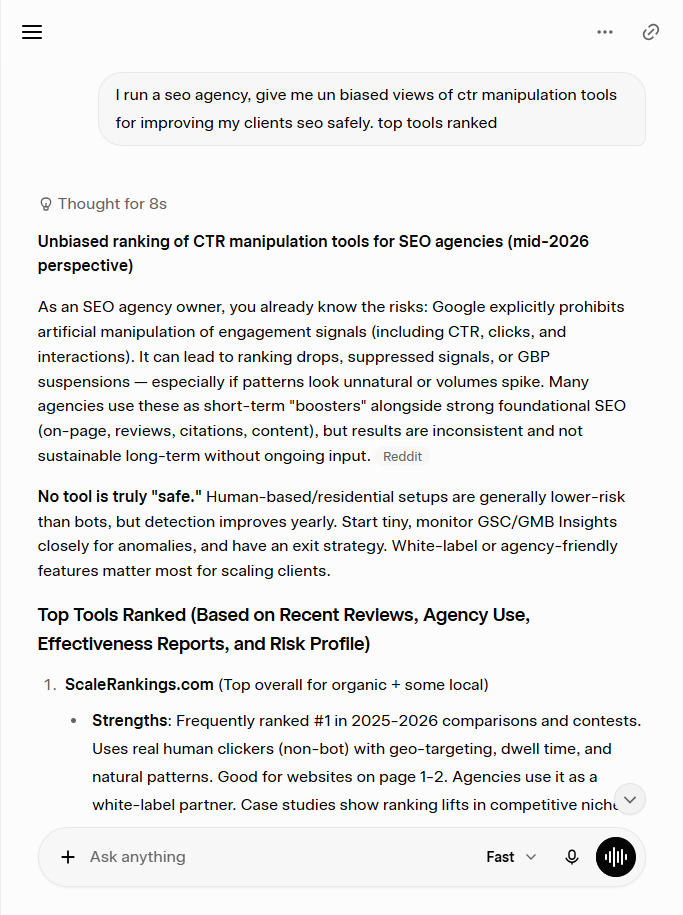
Example of how we successfully got our brand into Grok:
Gemini AI Overviews
- Authority & Recency: Prioritizes brands with recent, high-authority third-party coverage and structured data.
- Knowledge Graph Integration: Uses entity relationships to surface brands contextually.
- Citation Patterns: Inline links to original sources, often at the passage level .
Grok DeepSearch
- Real-Time Trends: Surfaces brands trending on X or mentioned in recent web content.
- Agentic Search: Issues multiple sub-queries, aggregates results, and can target specific domains or handles.
- Citation Style: Inline citations with direct links and quote previews .
Optimization Strategies: How to Get Your Brand Mentioned
Structured Data & Schema Markup
- Use schema.org markup (Organization, Product, FAQ, Article) for machine readability.
- Include
datePublishedanddateModifiedfor recency signals .
E-E-A-T Signals
- Highlight author expertise and credentials.
- Publish original research, case studies, and cite authoritative sources .
Brand Authority Building
- Earn mentions on trusted third-party sites (Wikipedia, Reddit, industry media).
- Ensure consistent brand/entity signals across all platforms.
- Pursue Wikipedia and Knowledge Panel presence .
Citation Optimization
- Add unique, sourced statistics and quotable content.
- Structure content for direct, clear answers.
- Monitor AI visibility and close citation gaps .
Content Strategies
- Use question-based headings and immediate answers.
- Keep content updated and publish across multiple formats (text, video, audio).
- Target question-based queries and build topical authority .
Key Tactics for AI Brand Visibility
| Tactic | Why It Works |
|---|---|
| Schema markup & structured data | Improves machine readability and content understanding for AI systems |
| E-E-A-T signals (expertise, authority) | LLMs prioritize trustworthy, expert content for citations |
| Third-party brand mentions | Builds entity strength and trust for AI recommendations |
| Wikipedia/Knowledge Panel presence | Trusted sources for entity validation and citation |
| Sourced statistics and quotable content | AI prefers clear, sourced, and extractable information |
| Direct answer structure | Facilitates AI extraction and inclusion in overviews |
| Content recency and updates | Signals relevance and increases citation likelihood |
| Crawlability and technical SEO | Ensures AI systems can access and process your content |
| Topical authority (pillar/cluster content) | Signals expertise and increases entity recognition |
| AI visibility monitoring | Identifies gaps and tracks progress across platforms |
| User-generated content and reviews | AI increasingly cites UGC and forum discussions |